Portugal Visa Appeal Guide
The court period for a visa refusal appeal in Portugal is three months by default for an annulable act, unless a special rule applies. It runs from notification when that is required, so the date and method of notice matter before any remedy is chosen.

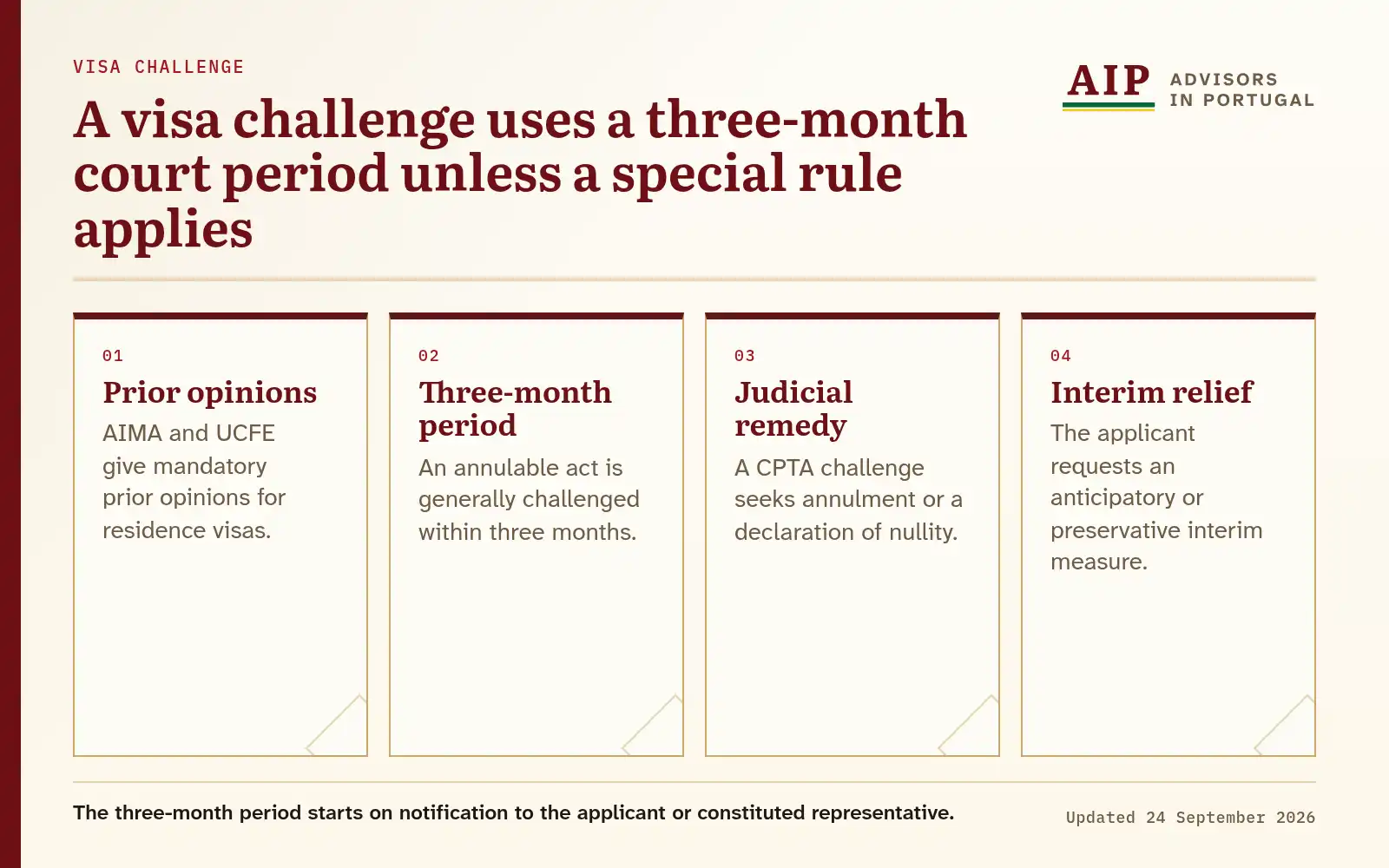
Diagram text version
AIMA and UCFE give mandatory prior opinions for residence visas. An annulable act is generally challenged within three months. A CPTA challenge seeks annulment or a declaration of nullity. The applicant requests an anticipatory or preservative interim measure.
Article 58(1)(b) of the Código de Processo nos Tribunais Administrativos sets a default three-month period to challenge an annulable administrative act, unless a special rule applies. Article 59(2) starts that period on notification to the person or constituted representative where notification is required. The visa decision and its notification therefore matter before any remedy is selected.
This guide describes the rules that apply to a refusal of a Portuguese visa. It states the procedure and cites the sources.
What part of a visa refusal can you challenge?
Article 53(1)-(5) and (12) of Lei n.º 23/2007 addresses prior opinions and consular refusal in residence and temporary-stay visa cases. AIMA gives the migration-risk opinion where the article requires its prior opinions. The consular authority decides refusal in the cases described by the provision. The actual decision and any notice received are the starting point for describing a challenge.
The relevant records identify the decision-maker, the stated grounds and the documents that bear on those grounds. These include the visa application, the supporting documents and any later correspondence. Article 53 is not a complete list of every possible refusal reason, and its text alone does not supply a universal notice form. The specific administrative act shown in the record determines the analysis. The date and method by which the decision reached the applicant should be kept, since notification can affect the court period.
Is the first step an administrative complaint or a court case?
Article 50(1) of the Código de Processo nos Tribunais Administrativos describes a judicial challenge to an administrative act as seeking annulment. Article 37(1)(a)-(b) places those claims within the administrative-court action framework. Whether an administrative complaint or hierarchical appeal applies depends on the particular refusal. The decision and any special procedure are identified before a route is chosen.
Any prior complaint and answer belong in the record if an administrative step has already been taken. That step can affect the available court claim and its timing under the applicable rules. The legal aim matters: a request to annul an act, a claim about nullity and a request for interim protection address different issues. A letter to a consulate does not necessarily have the same effect as a court filing.
Which authority or court receives the case?
Article 48(1)(b) of Lei n.º 23/2007 assigns ordinary visa-granting competence to Portuguese consular posts and consular sections in the cases described there. Article 37(1) of the Código de Processo nos Tribunais Administrativos places a judicial challenge within the administrative-court jurisdiction. The specific recipient depends on the act and procedural facts.
The consular post, visa category and authority named on the decision identify the body that acted. AIMA and UCFE may have given prior opinions under Article 53, but those roles do not by themselves identify the court for a challenge to the consular decision. The application reference and all communications showing which body acted should be retained, because they show the actual decision that a case is framed against.
How long do you have to challenge the decision?
Article 58(1)(b) of the Código de Processo nos Tribunais Administrativos gives a default three-month period for an annulable act, unless a special legal rule applies. The notification date should be recorded, and any special rule should be checked before the default period is relied on.
Article 58(1) treats a challenge to a null act differently from one to an annulable act. The legal character of the decision determines which remedy and period apply. The envelope, email or portal record showing how and when notice occurred should be preserved. A visa service description cannot replace the statute and the particular notice. The procedural position depends on facts that cannot be reconstructed reliably from a generic visa category alone.
Which documents support a challenge?
Article 11(1)-(2) of Lei n.º 23/2007 addresses sufficient means for a stay and onward or return journey, with the specified payment-means and accommodation exception. Where a refusal concerns means of subsistence, the relevant records are the income, funds, accommodation and travel documents that speak to that statutory question.
The decision’s stated reason is compared with the documents submitted in the original application and any later evidence. The usual records are the visa form, consular correspondence, the decision notice and proof of when it arrived. Documents that were before the decision-maker are distinguished from documents created later. A translation, apostille or service requirement may apply to the act being prepared. Each court or administrative act has its own procedural and evidential requirements, and these must be met before filing.
Does a challenge protect your position while the case proceeds?
Article 112(1)-(2) of the Código de Processo nos Tribunais Administrativos permits a person with standing to seek anticipatory or preservative interim measures that protect the usefulness of an eventual judgment. Article 120(1)-(2) governs the assessment of interim relief. A request for protection before a final decision rests on the concrete harm and urgency.
Whether an interim application fits depends on the facts and the proposed main claim. The refusal, the travel or family circumstances, and documents showing the consequences of waiting support the request. Filing a challenge and obtaining interim protection are separate procedural steps under Articles 112 and 120. The case file explains why the requested measure is suitable for the specific harm. The Article 120 test is assessed against the documents available.
Who may represent an applicant in a visa appeal?
Article 66(1) of the Estatuto da Ordem dos Advogados makes use of the title advogado and performance of acts reserved to lawyers dependent on registration with the Ordem dos Advogados. The exact legal act determines whether it is reserved to lawyers.
The scope of a particular representative act depends on its legal character. The applicant identifies the act, the person who signs it and the person who submits it before the applicant or a lawyer files an administrative or judicial challenge. A person who helped prepare the original visa application is not necessarily authorised to conduct every later procedural act.
Does the visa application fee cover a challenge?
No. The short-stay visa service charge applies to the visa application and does not establish an appeal tariff. The application receipt belongs with the original case record. That payment is separate from any later challenge.
What happens after a court decision?
Article 143(1) of the Código de Processo nos Tribunais Administrativos gives ordinary appeals a suspensive effect on the appealed decision unless special law provides otherwise. It matters whether a later appeal concerns the main judgment or an interim measure, because Article 143 governs their effects.
The judgment, the service record and any order on interim relief should be retained. The notification and further-appeal rule depends on the particular decision. Whether a further appeal is available, and which period applies, is determined from the actual decision and notification.
What changed in the current immigration law?
The current consolidated Lei n.º 23/2007 lists Lei n.º 62/2026 of 10 September among its amendments. Article 53 still provides the mandatory prior-opinion rule for residence and temporary-stay visas in the current text. That amendment listing does not itself establish a new general visa-appeal procedure. The rule in force for the date and type of decision received is the one that applies.
The current Article 53 wording is compared with the authority’s stated reason and the documents in the original application. The default court challenge period remains a separate question under Articles 58 and 59 of the Código de Processo nos Tribunais Administrativos. A special-rule analysis may be needed before the default period is used.
Common questions
Which body performs security checks under Article 53?
What can a CPTA challenge seek besides annulment?
Does filing a challenge automatically suspend the refusal?
Which passport holders fall within Article 48(1)(a)?
What effect does an appeal from an interim decision have?
What law governs the acts reserved to lawyers?
The information on this page is checked against official sources and reviewed regularly. It is corrected when the law or official guidance changes, as the Editorial Standards describe.